





The Manifesto House: buildings that changed the future of architecture

The Manifesto House: buildings that changed the future of architecture, Owen Hopkins, Yale University Press, 2025, 240 pages, 111 colour and black-and white illustrations.
Owen Hopkins’ definition of a ‘manifesto house’ is ‘one that acts as a site for innovation, new ideas and new ways of doing things.’ To demonstrate this notion, he selects 21 examples whose architects have pushed the boundaries of domestic design, and explains how they transformed the way that architectural history can be assessed.
The selected houses fall into three categories. The first group looks back to the architectural past to create a new future, his chief exemplars being Palladio’s Villa Rotonda and Sir John Soane’s House and Museum. Also included are houses that display nostalgia – Philip Webb’s Red House, built for William Morris and the house that Robert Venturi designed for his mother in Philadelphia. The latter was at the forefront of postmodernism, which challenged the belief that the abstract formalism of ‘s’ architecture could provide a better future. The Thematic House, Charles Jencks’ own house in London, designed by himself and Terry Farrell, took this ideology further as a built manifesto of Jencks’ architectural ideas.
The second group consists of houses that connect with the natural world. Hopkins’ earliest example is Frank Lloyd Wright’s celebrated Fallingwater, which was built over a ravine in Pennsylvania in 1938, with wide concrete balconies projecting over the stream below. The house appeared on the cover of Time magazine in 1938 and instantly captured the world’s imagination. Very different in form and materials is Lina Bo Bardi’s house, Casa de Vidro, in São Paulo, Brazil, a glass block on stilts that appears to float among the trees that surround it. Not surprisingly, it suffered seriously from heat and glare in summer and cold in winter, and maintenance has been a constant battle.
In contrast, Sarah Wigglesworth’s 9/10 Stock Orchard Street, London, is built of straw bales wrapped in a transparent waterproof membrane, sandbags and gabion piers filled with salvaged rubble, though these experimental construction methods have also suffered some problems. Much less well-known is Anupama Kundoo’s Wall House in Auroville, India, a beautiful building that succeeds in mastering the climatic challenges as well as assimilation with the wider landscape.
Hopkins’ third category focuses on modernist houses built in Europe and the USA, which he describes as looking forward. Le Corbusier’s Villa Savoye, which features on the book cover, is the epitome of modernist ideology. Built in 1931, it provided a powerful example of Le Corbusier’s Five Points of a New Architecture, one of the most famous architectural manifestos of all time. Fittingly, Eileen Gray’s house E-1027, built overlooking the Mediterranean in the south of France, also receives a chapter. This stylish modernist house was built at the same time as the Villa Savoye but, as Hopkins remarks, what makes it so compelling is ‘how it holds the mechanistic, intellectual aspects of modernism in a thrilling tension with its sensuous and humanistic possibilities.’
The houses are well described and analysed, with fine photographs, but only one – the Villa Rotonda – is accompanied by a plan, which makes it difficult to fully understand the layouts. The last manifesto house to be included is something quite different. This is the Mars House, a set of virtual images designed by artist Krista Kim and sold on the NFT crypto market for $512,000 in 2020, which exist only in the digital world. As yet, such items provide little more than a hint of how the world of augmented reality (AR) might influence the way we live in the future; but Hopkins sees them as an opportunity for architects to ensure that public values might hold greater importance than individual wealth, a theme that he pursues in the brief epilogue.
Indeed, the epilogue can be seen as a calling cry for architecture to reinvent itself, setting aside long held concepts and embracing new ideas based on combating climate change and creating a fairer world. To do this, he urges not only looking forward with the aid of emerging technology but also looking back at traditional methods of doing things before they were marginalised by the rise of modernism. The Manifesto House, he argues, provides a good starting point.
This article originally appeared as ‘New ways of doing things’ in the Institute of Historic Building Conservation’s (IHBC’s) Context 184, published in September 2025. It was written by Peter de Figueiredo, reviews editor, Context.
--Institute of Historic Building Conservation
Related articles on Designing Buildings Conservation.
- Building, contemporary dance and structuralist thought.
- Conservation.
- Frank Lloyd Wright.
- Heritage.
- Historic environment.
- House.
- IHBC articles.
- IHBC.
- Le Corbusier.
- Listed building.
- Our future in place, The Farrell Review of Architecture + the Built Environment (FAR).
- The future of housing.
- Types of dwelling.
IHBC NewsBlog
IHBC sponsors Gardens Trust event 23-4 Sept 2026
.jpeg)
'Learning from the Past, Shaping the Future’ takes place in Milton Keynes
Renovations to Frank Lloyd Wright's Fallingwater complete
.jpg)
World Heritage Preserved project opens house for tours again
Shakespeare Birthplace Trust places Hall's Croft on HAR Register
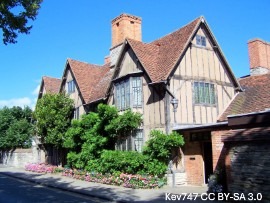
Stratford-upon-Avon home of Shakespeare's daughter is 'At Risk'
Lady Grange’s House repaired on St Kilda
.jpg)
National Trust for Scotland repairs stone cleit with link to famous island resident
Griff Rhys Jones on BBC Radio 4 Today programme
,_Green_Lane,_Derby.jpg)
The Victorian Society’s President unveiled its latest Top Ten Endangered Buildings 2026.
Need a MATE? Book your place now.
IHBC offers free webinars on applying for IHBC accreditation (Full & Associate).
UK Stained Glass Repository finds windows new homes
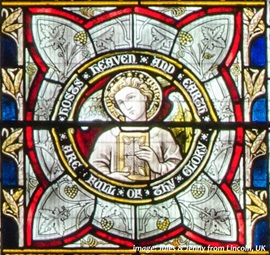
How are stained glass windows are rescued, stored and repurposed?
APPGEBE report sets high aims for quality
'Government must not sacrifice quality in drive to build 1.5m homes'
New measures protect Historic Shipwrecks from heritage crime

Underwater cultural heritage benefits from new HE guidance
How could the City of London skyline look in 6 years' time?

Visualisation shows approved planning applications as completed buildings
National Trust for Scotland calls for VAT cuts
Heritage neglect is encouraged by current policies
IHBC's 'Context' Issue 186 features Industrial Heritage
IHBC's members' journal reports on the challenges of conserving infrastructure
Book now for IHBC Annual School 2026
IHBC Annual School is taking place 18-20 June 2026 in Newcastle
RICHeS Research Infrastructure offers ‘Full Access Fund Call’
RICHeS offers a ‘Help’ webinar on 11 March
Latest IHBC Issue of Context features Roofing
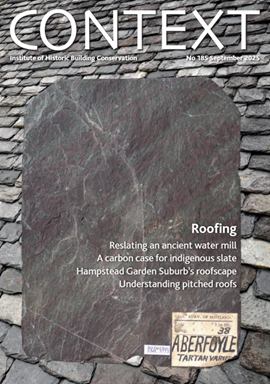
Articles range from slate to pitched roofs, and carbon impact to solar generation to roofscapes
Three reasons not to demolish Edinburgh’s Argyle House

Should 'Edinburgh's ugliest building' be saved?
IHBC’s 2025 Parliamentary Briefing...from Crafts in Crisis to Rubbish Retrofit
IHBC launches research-led ‘5 Commitments to Help Heritage Skills in Conservation’
How RDSAP 10.2 impacts EPC assessments in traditional buildings

Energy performance certificates (EPCs) tell us how energy efficient our buildings are, but the way these certificates are generated has changed.